The Ceiling of the City: A Challenge to the Secular Moralist
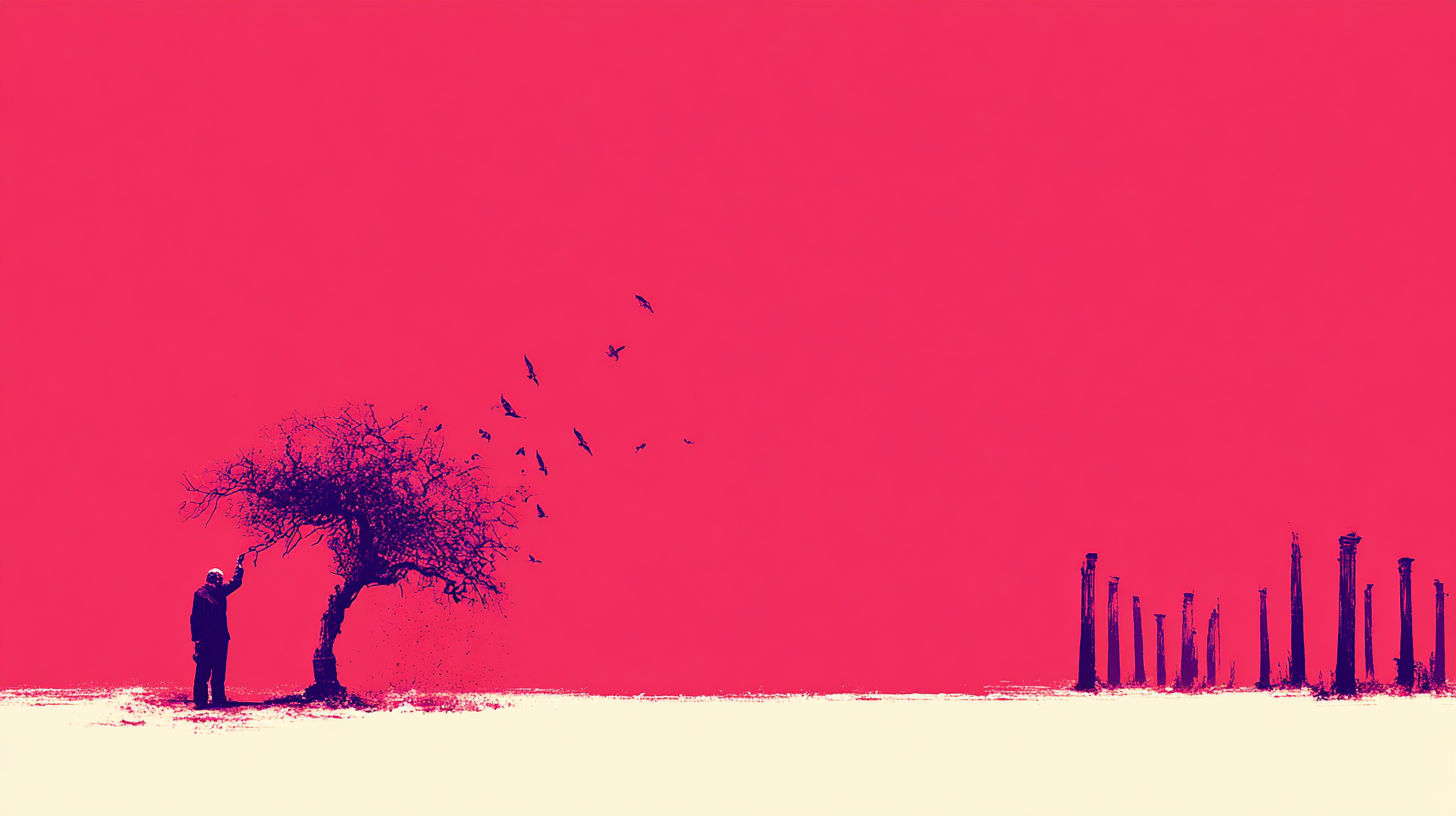
“The secularist wants Human Rights without Human Nature. He wants the Kingdom of Justice without the King. But without the Transcendent, "Good" is just a synonym for "Popular." Only God guarantees the dignity of the unpopular.”
The modern secularist -- often represented by the political Left -- finds himself in a precarious philosophical position. He possesses a burning moral passion. He demands justice for the oppressed, equality for the marginalized, and care for the earth. These are noble desires. But when asked why these things are good, he stammers.
He might say, "Because they reduce harm," or "Because we have empathy." But these are descriptions of feelings, not definitions of Good. If a sadist feels no empathy, is he wrong? If a society decides that "harming" a minority group increases the "happiness" of the majority, is it "good"?
Without a Transcendent standard -- a Good that stands outside and above human consensus -- moral reasoning collapses into a power struggle. The "Good" becomes whatever the strongest tribe says it is.
The Wisdom of the Greeks
You ask about Aristotle. Did the Greeks point to the Transcendent? Yes, but through a glass darkly.
Aristotle was not a modern materialist. He understood Telos -- that every nature has a final end. An acorn is "good" when it becomes an oak. An eye is "good" when it sees clearly. Therefore, a man is "good" when he fulfills his nature as a rational, social animal. Aristotle realized that ethics was not about "rules," but about happiness (Eudaimonia) -- flourishing in accordance with virtue.
He even saw that the universe required a "Prime Mover" -- a pure Actuality that set all things in motion. He knew that the material world was not enough to explain itself.
Why Aristotle Was Not Enough
So, why did we need St. Thomas Aquinas? Why couldn't we just stay with the Nicomachean Ethics?
Because Aristotle hit a ceiling. For the Greek pagan, the highest good a man could achieve was political prudence in the City or, for the lucky few, philosophical contemplation. But this happiness was fragile. It ended at death. It was reserved for the free, wealthy male. It had no answer for the slave, the cripple, or the suffering.
Aristotle’s "Prime Mover" was an object of thought, but it was not a Friend. It did not know you. It did not love you. Aristotle could tell you how to be a good citizen, but he could not tell you how to be a son.
The Thomistic Breakthrough
Enter St. Thomas. He did not reject Aristotle, he baptized him. He took the Aristotelian framework -- that nature has a purpose -- and blew the roof off the City.
Aquinas demonstrated that the human heart has an infinite thirst. We desire a Good that never ends, a Truth that never fades, and a Love that never dies. If nature does nothing in vain, then this infinite thirst must have an Infinite Object.
This is the Beatific Vision. Thomas showed that our Telos is not just "civic virtue," but union with God. This changed everything. 1. Universality: Aristotle thought some men were "natural slaves." Aquinas showed that because every man is called to this infinite Good, every man has infinite dignity. 2. The Nature of Good: The Good is no longer just "what works for the City." The Good is God Himself. 3. Freedom: Freedom is no longer just political liberty -- it is the spiritual capacity to journey toward that infinite Love ("Freedom for Excellence").
The Challenge
Here is my challenge to the modern Leftist: You are trying to keep the fruits of the Thomistic revolution (universal human rights, the dignity of the weak, the demand for infinite justice) while hacking at the root.
You want the "Good" to be binding and universal, but you deny the Telos that defines it. You have rejected Aristotle’s "Nature" (through gender ideology and nominalism) and you have rejected Aquinas’s "God" (through secularism).
You are left with a "Good" that hangs in mid-air. You are trying to build a cathedral of justice on a foundation of fog. Without the Transcendent, your "justice" is just a preference. And preferences change. Only the Transcendent secures the Good against the tyranny of the moment.