The Chains and the Image: Why Power Cannot Touch Dignity
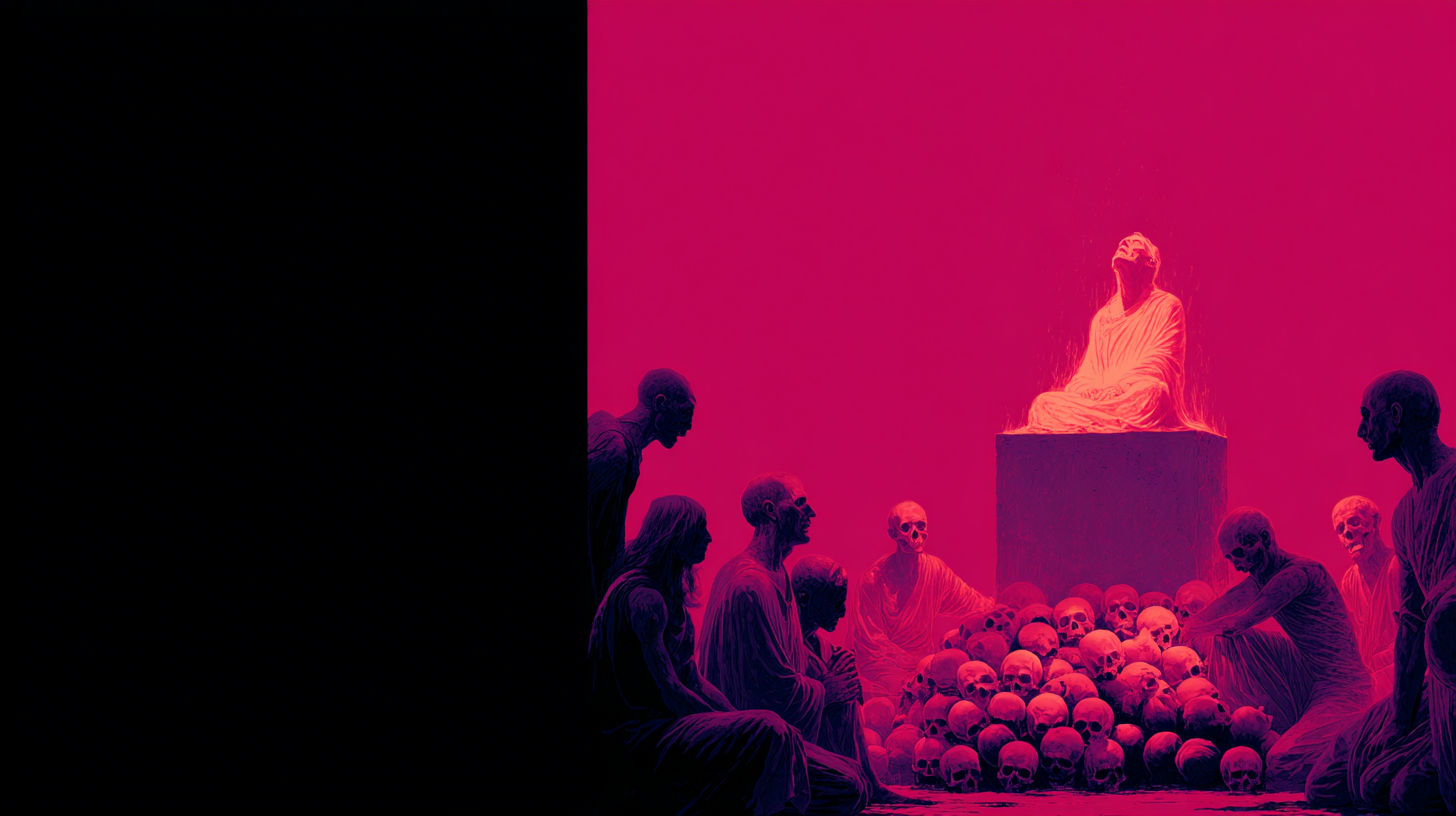
“The State can take your liberty, but it cannot take your dignity. If dignity came from the government, slavery would not be a sin -- it would just be a policy. We condemn slavery because the slave remains the Image of God, even in chains.”
There is a terrible simplicity to the atheist's argument against God-given rights. He looks at history, sees the blood and the chains, and says: "If God gave men rights, why are men in cages? Clearly, rights are a myth."
This argument rests on a fundamental misunderstanding of what a "Right" is. The materialist thinks a right is a magical force field that physically stops a bullet or unlocks a chain. Since the bullet still flies and the chain still holds, he concludes that rights do not exist.
But in the Christian tradition, a Right is not a force field. It is a moral claim. It is a statement about Reality. When we say a man has a "Right to Liberty," we are saying that to enslave him is to violate the order of the universe. The fact that the violation happens does not disprove the Right. It proves the Evil.
The Southern Heresy
The critic points to the American South. "They were Christian," he says. "The Bible supports slavery."
We must face this darkness. It is true that for centuries, men baptized their greed. They read the regulations of servitude in the Old Testament and ignored the liberation of the New. They practiced a "Gnostic" Christianity -- a faith of the spirit that ignored the dignity of the body.
But we must also look at the antidote. Who brought down the slave trade? It was not the secularists. It was William Wilberforce in England. It was the Quakers in America. It was men and women who read the same Bible but read it through the lens of the Imago Dei. They saw that if a slave is a brother in Christ (as St. Paul told Philemon), he cannot be a tool.
The Bible did not invent slavery. Slavery was the universal condition of the ancient world. The Bible planted the seed -- the brotherhood of all men -- that eventually strangled the weed of slavery. That the weed grew tall before it died is a testament to human sin, not to the defect of the seed.
Dignity vs. Liberty
The critic argues that the government "took away" the dignity of the slave. This is the most dangerous error of all.
If the State gives dignity, the State can take it away. If the American government truly had the power to remove the dignity of the African slave, then the slave ceased to be a human person and became a farm implement. If that is true, then the slave owner did nothing wrong. You cannot "oppress" a shovel. You cannot "violate the rights" of a tractor.
The only reason slavery is a moral horror is because the slave retained his dignity even while in chains. The State could crush his body, but it could not subtract one ounce of his worth. His dignity was "alien" to the State -- it came from a source the State could not touch. This is why the slave's spiritual songs -- the Negro Spirituals -- are full of such profound power. They are the sound of the Imago Dei singing through the bars.
The Thunder of Justice
Finally, the critic says, "I haven't seen God protecting anybody lately."
This is the complaint of Job. We want justice to be immediate. We want the lightning bolt to strike the tyrant the moment he signs the decree.
But God respects the freedom of man, even the freedom of the wicked. He allows the wheat and the tares to grow together. However, nature is not mocked. A society built on a lie cannot stand forever.
The "thunder of God" is often heard in the collapse of the systems that defy Him. The Roman Empire fell. The Third Reich fell. The Soviet Union fell. And the system of chattel slavery fell, drowned in the blood of the Civil War.
The protection of God is found in the Moral Law itself. When a civilization ignores the rights of the person, it begins to die. It rots from within. The critic may not see the lightning bolt today, but if he looks at history, he will see the wreckage of every regime that tried to build a world without the concept of the Sacred Person.
We defend the divine origin of rights not because it makes life easy, but because it makes justice possible. If there is no God, the slave is just a loser in the struggle for survival. If there is a God, the slave is a Prince in exile, and his oppressor is standing on the edge of the abyss.